
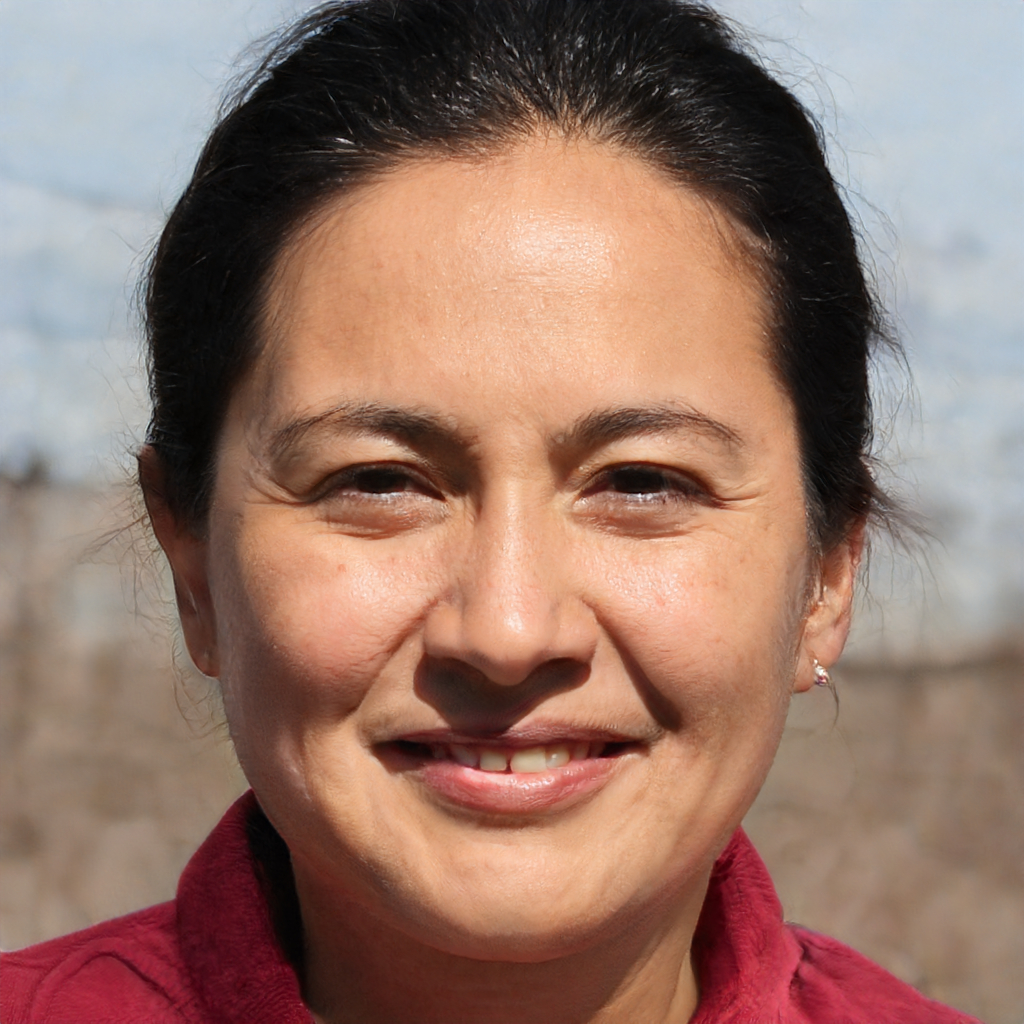
Brenda’s eyes went to the yellow folder before she looked at my mother’s Social Security card. I knew then the little story I’d practiced in the car wasn’t going to work.
I’d helped get my mother listed as dead. I know how that sounds. I know you may hate me for it. Maybe you should. There’s a reason I took her to that office myself, but it doesn’t make what I did right.
My mother, Susan, was sixty and lived in Pontiac in a small cinderblock house with a tin roof. She’d spent most of her life doing other people’s laundry and sewing uniforms at our kitchen table. When I was little, the machine’s foot pedal squeaked twice before it started. I can still hear that sound when I’m trying to sleep.
She never had much. But there was always food, even when she said she’d already eaten. I didn’t understand until I had kids of my own that she was usually lying.
My dad, Sam, left when I was young. He said he was going west for work. He didn’t come back. Mom raised me by herself, and I grew up thinking that meant she could handle anything. I didn’t see how much she had to swallow to make that look true.
I started leaning on her the same way I’d watched everybody else lean on her. First it was babysitting for a couple hours. Then full days. Jared, my husband, and I had two kids, and money was always tight. Mom watched them while I picked up shifts and did errands. She cooked, too. She never asked me to pay for groceries.
I told myself I was helping her by letting her be close to the kids. That was one of the things I said so I could sleep.
Jared was more blunt. He’d walk around her backyard and talk about what could be built there after she was gone. Storefronts, maybe apartments above them. Mom would keep folding laundry while he talked. I’d tell him to stop, but never in a way that made him stop for long.
“I’m only thinking ahead,” he’d say.
I liked having someone else make plans. I didn’t like what the plans said about my mother. Both things were true.
The money problem got bad before I took her to the office. Jared had borrowed from a friend to keep his repair shop going. Then the shop fell behind on rent, and the friend wanted his money back. We had two kids, a car payment, and a stack of shutoff warnings on our counter.
I’d started staying up after the kids went to bed, adding up bills on the back of grocery receipts. I’d get a different total every time. The answer was always that we didn’t have enough.
Mom had mentioned applying for benefits. She thought there might be something available to her, though she wasn’t sure what. She asked me to help because she hated filling out forms and didn’t trust herself to know which papers mattered.
I said yes too fast.
By then I’d already done something I can’t dress up as a mistake. I’d used her information to get a benefit account started in her name, with the payment going to an address I could reach. I told myself I was borrowing from money she wasn’t using yet. I told myself I’d put it back when Jared’s shop got through the worst of it.
The account had been open for two years and eight months by the time we went to the office. I had taken the payments every month. Not all of them went to me. Some went to rent, food, and the electric bill. Some went to Jared’s debt. Some went to things I wanted and didn’t need.
That last part is hard to admit. I could list the bills and make myself sound like I had no choice. But I bought a new phone while my mother still used one with a cracked screen. I knew the difference.
When Mom asked about benefits again, I told her I’d take care of it. She had no idea I’d already taken care of something else.
I brought a yellow folder to her house. I put in her state ID, birth certificate, Social Security card, and a utility bill. She asked why I needed the originals.
“Just so they can check them,” I said.
She looked at me for a long second. Mom never had to raise her voice to make me feel small. She could just look at me like she was trying to remember the child I used to be.
“You can bring copies,” she said.
“I don’t want them to turn us away.”
That was partly true. I didn’t want them to turn us away before I could steer the conversation.
I made coffee. I rubbed her shoulders, which I hadn’t done in years. I even called her “mommy,” like I did when I was young and wanted something. I knew I was being too nice. I knew she knew it, too.
The morning we went, Jared drove us in a car he said a friend had lent him. It smelled new inside. Mom noticed the smell and asked if Jared’s friend had just bought it.
“Maybe,” I said.
Jared was watching the road. He’d told me not to let Mom talk about what she wanted to do with the money. He thought she’d give it away or forget to pay something. I said she wouldn’t. He said I was making it harder than it had to be.
At the office, I kept talking. I said the benefits would help Mom. I said she didn’t need to keep working. I said it might be easier if I managed the money for her. Each thing sounded reasonable on its own. Put together, it sounded like I was trying to take her life out of her hands.
Mom said she could manage her own money.
“I know, Mom,” I told her.
I didn’t know. I mean, I did know. I just needed her not to ask too much.
When Brenda called us to the desk, I leaned over and told her I was there as Mom’s representative because Mom couldn’t see well. Mom corrected me. She said her eyesight was fine. I squeezed her arm under the desk, harder than I meant to.
Brenda noticed. She looked at my hand, then at Mom.
I knew that look. It was the look people get when they’ve decided not to trust the person who brought the older woman in.
Brenda typed in Mom’s number. She looked at the screen, then at Mom’s ID. She typed again and stopped.
“Is there a problem?” I asked.
Brenda didn’t answer me. She got another worker in a burgundy vest and showed her the screen. I started saying we could come back another day. I reached for Mom’s tote bag like I could get us out of there before anybody said the thing I knew was coming.
Brenda asked Mom to sit down.
Mom sat. I didn’t.
“The system lists me as deceased?” Mom asked after Brenda explained it.
Brenda said the record showed Mom had died three years earlier. Then she printed a page and folded it before handing it over. She told Mom not to sign anything and to talk to an investigator.
I tried to take the page. Mom pulled it to her chest.
“No,” she said.
That was the first time all morning she sounded like herself.
Brenda said there was also a benefit card registered in Mom’s name. It had been issued two years and eight months earlier. I heard the exact number of months and felt my mouth go dry. It was the number I’d been carrying in my head every time I checked the account.
Mom asked who had received it. Brenda said she couldn’t safely discuss that at the counter. She told Mom the card had been mailed to an address that wasn’t her house.
Mom looked at me. I tried to look surprised. I don’t know if I managed it.
In the car, she held the printed page flat on her lap. Jared asked what happened. I said there was a problem with the system.
Mom didn’t say a word until we were a few blocks from her house.
“Why were you reaching for my bag?”
I said I was trying to help her.
“No,” she said. “You were trying to leave.”
I had no good answer. I told her the office got something wrong. I said I’d call and straighten it out. I said a lot of things. She just kept that page in her lap.
Jared waited in the car while I walked Mom to her door. I wanted her to say something that would let me pretend we were still the same. She didn’t. She put the page on her kitchen table and asked me to go.
I went.
At home, Jared wanted to know whether the account was still safe. I told him Brenda had noticed something. He got mad at me for taking Mom in without warning him. That was fair, in its own ugly way.
He asked if Mom had the card number.
“I don’t know.”
“Did you tell her anything?”
“She saw the page.”
He swore and walked into the other room. I sat at the kitchen table, looking at my phone. The account was still open. The balance was $114.63. I had checked it so often that I knew the screen without looking.
I could have closed it. I could have called the office and said it was a mistake. I could have kept lying until somebody made me stop. Instead, I called the number Brenda had written down for Mom.
I asked for an investigator. When the investigator called me back, I said I’d been involved in opening the account and knew the money was going to an address I controlled. I didn’t say it in a brave way. I said it because there was no version left where Mom didn’t find out.
The investigator asked me to come in with the papers I had. She told me not to contact anyone else about the account. I asked if Mom would lose her benefits because of what I’d done.
“She won’t be responsible for your actions,” the investigator said.
I started crying then. Not because I’d suddenly become a good person. I was scared of prison. I was scared my kids would hear what I’d done. I was scared Mom would tell them I had been stealing from her. I also felt relief, and I hated myself for that most of all.
I met the investigator two days later. I brought the yellow folder and the account statements. She asked me who filled out the forms, who supplied the mailing address, and whether Mom knew about the account.
I said I had done it. I said Mom didn’t know.
She asked whether Jared knew.
I wanted to protect him. I said he knew some of the money had come in but didn’t know how I got it. That was the truth, though it wasn’t the whole truth. He had asked where the money came from and accepted the answer I gave him because he needed it to be true.
The investigator said that wasn’t her job to sort out in that meeting. She took the statements and gave me a list of what to bring next time.
When I told Jared, he got quiet. He said if I gave them his name, it would hurt the kids. I told him I wouldn’t lie, but I didn’t know whether I could make myself say everything. We fought in the kitchen while the kids were upstairs. I kept lowering my voice, which didn’t make it a better fight.
“You’re going to wreck this family,” he said.
I told him I’d already done something that could wreck Mom’s family. Ours wasn’t the only one that counted.
He slept on the couch that night. In the morning he said he was sorry. He didn’t say what for. I didn’t ask.
Mom wouldn’t take my calls for a week. I kept wanting to send a long message explaining the bills, Jared, the kids, the shop, and how I had meant to pay it back. I wrote it twice. Both times I deleted it.
When she finally answered, she told me to come by alone. I left the kids with Jared and drove to Pontiac. I parked in front of the house and sat there for a minute with the engine running. Then I went inside.
Mom had put the papers on her kitchen table. The old sewing machine was still near the wall. I looked at it instead of her.
She asked how long I’d known.
I said I’d set it up almost three years ago.
She asked how much I’d taken.
I told her the amount in the account statements. I didn’t try to round it down. It was $27,406.18. I’d guessed lower in my head, because the total made me feel sick. The paper showed every payment.
She read the page slowly. Her finger stopped at a payment from the month my son had been sick. I remembered that month. Mom had watched him for two afternoons while I went back and forth to the clinic. She’d made soup and sent us home with a container.
I hadn’t thought of that money as hers then. I’d thought of it as money that kept our lives moving. There’s a difference. I knew it even while I was doing it.
“Why did you do this to me?” she asked.
I said I was scared. I said Jared was in trouble. I said I thought I could pay it back. I said the kids needed things.
Mom put the page down.
“So did I,” she said.
I had no answer. She had needed the money too. She’d been buying food for all of us and pretending it was nothing. I had taken from her and then kept accepting the food.
She told me she’d contacted the office. She’d met with someone there and signed a statement. She said she wanted her own benefits restored and the account shut down. She wasn’t going to lie to protect me.
I said I understood.
She asked if I understood or if I was just trying to end the conversation. I told her I didn’t know. That was the first honest thing I’d said in a while.
The next months were calls, forms, and meetings. The agency restored Mom’s benefits after reviewing her identity and records. The false death entry was corrected. The account I’d used was closed. I paid back what I could from my tax refund and agreed to repay the rest through a court plan.
I pleaded guilty to the fraud charge. I got probation, repayment, and community service. I didn’t go to jail. I still sometimes think that means I got off easy. Then I remember the way Mom looked at me at that table and understand that not every punishment comes with a court date.
Jared and I stayed together, but I stopped pretending our choices were the same. He had taken money we both knew was wrong. He didn’t file the papers, but he didn’t ask how I got it, either. We talk about the kids and bills. We don’t talk much about what kind of people we were when we thought nobody would check.
Mom and I started talking again, slowly. She lets me visit the kids at her house. She doesn’t let me handle her mail. I don’t blame her. Sometimes she asks me to bring groceries, and I do. I leave the receipt on the counter without being asked.
The first time she let me sit at the kitchen table again, I brought the yellow folder with the repayment papers. She put it in a drawer and made tea. We talked about my son’s school, then about the roof, which still needed work.
She didn’t forgive me. She didn’t say she wouldn’t, either. We sat there with our cups between us, and for a while neither of us tried to make it sound better.
The card had gone to my address. I had written it carefully on the form, in my own handwriting.